

Art Studio vs. Art Gallery Lighting: How to Highlight Your Showpieces and Enhance Color
Art is personal, powerful, and downright inspiring—and at Total Track Lighting, we know the right light can make or break your creative process or display game. In a studio that is too dim or too cool, an artist might overcompensate with color or shade, ending up with a piece that’s off the mark. A gallery can cast a wrong light that turns your masterpiece yellow or casts harsh shadows—yikes! Worse yet, the wrong light can even damage your art. While art studios and galleries share some lighting needs, they’ve got their own vibes. Let’s dive into the best lighting tricks for creating and showcasing art, and why our track lighting is your go-to solution.

Brightness
Brightness is all about lumens, not wattage (that’s just energy use). For art creation, aim for around 600-2,400 lumens (depending on the ceiling height, distance to the art, etc) to nail those fine details and adjust for comfort. Keeping in mind you do not have to rely on just one bulb to do the heavy lifting. Factor in natural light, multiple fixtures, and adjust to your personal taste. Additionally, 1,000 lumens may be too bright for some and not enough for others as if your space is too dark, your art may find itself too light in composition. If your space is too bright, it may have a shadowy feel—find your sweet spot!
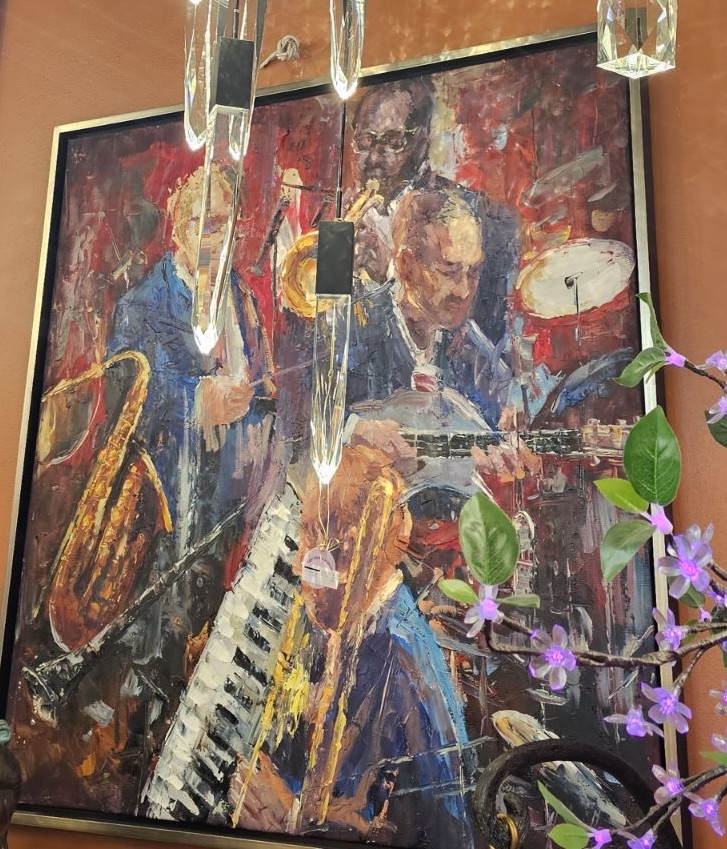
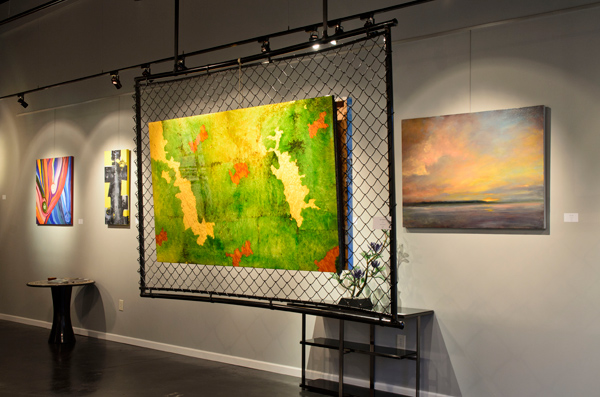
Galleries, however, you will see that 1,200 to 3,200 lumens works best, tweaked with ambient light, this provides an intimate and relaxing feel while pulling out true colors and details with the appropriate color temperatures and color rendering. The gallery’s backdrop can also play a significant role. If the gallery has brick walls, for example, leading to a darker moodier feel and absorbing light, you might hike up the lumens or add in fixtures to make your art piece pop. Also, light your art from a 45 degree angle but preferably from each side of the piece so that all perspectives are highlighted. Think of lighting a “stage” to get the perfect look and adjust accordingly. A light that looks good on one piece, may not look good on another.
CRI (Color Rendering Index)
CRI is your color truth serum—how well a light shows off a piece’s real hues. Natural daylight hits a perfect 100 CRI, but bulbs are not yet that perfect. However, a 85-95 CRI is easy to find and will get you close enough. This is an important game-changer for both making and displaying art.
Why CRI is Your Art BFF:
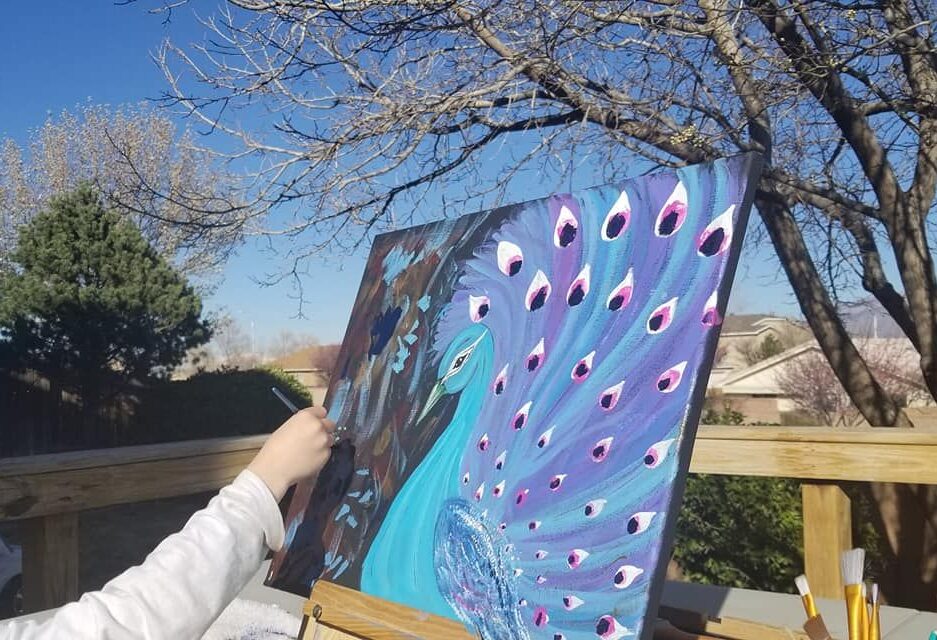
- Spot-On Colors: Artists and fans count on true colors to see the artwork as intended. Low-CRI lights can make hues look bland, faded, or distorted.
- Nailing the Vision: Painters need high-CRI light to mix colors that match natural daylight—low CRI can throw a curveball and change the outcome.
- Perfect Display: Galleries, museums, and even home art nooks thrive with high-CRI lighting (90+ and up) to keep colors popping and authentic.
- CRI vs. Color Temp: Not to be confused with Color Temperature (CCT)—that’s just the warm or cool feel, while CRI is all about color truth.
Color Temperature
This one can get tricky! We touched on it above. Measured in Kelvin, it runs from warm (1,800K) to cold (white white) (6,000K), with bulbs typically landing between 2,700K and 5,000K (and some that can dim to 1,800K). Color temps that are too warm can lead you to over compensate with cool tones, too cool and you over compensate with warmer colors with daylight, yet again, meeting that perfect mark. However, terms like “cool white,” “warm white,” or “daylight” lack industry standards. For example, “daylight” might be 5,000K-6,500K or 4,100K-5,500K depending on the brand. Always rely on the Kelvin number for your color temperature. Here is a guide to help.
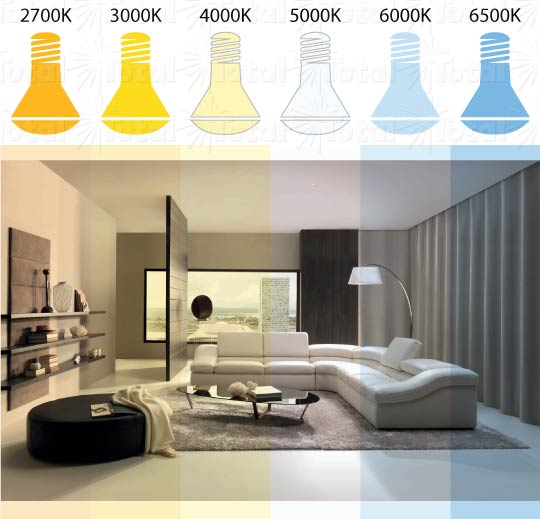
A 5,000K color temperature can mimic natural daylight for displays, and you can tailor the look of each piece by adjusting the color temperature individually.
In studios, 5,000k can feel harsh and can lead to feeling tired or cause squinting. If this is the case for you, layer in warmer ambient light or use 5,000K spotlights with cozier general lighting to keep your eyes happy.
Protection
Protecting art from UV and heat is key. Incandescent, halogen, and natural light can cause discoloration or distortion, while LED lights produce less heat and minimal UV, making them the safest choice. Though natural light is optimal for creating (with its perfect CRI and Kelvin), its inconsistency—cloudy days or shifting angles—makes supplementation with LED essential.
Proximity, Diffusion, and Control
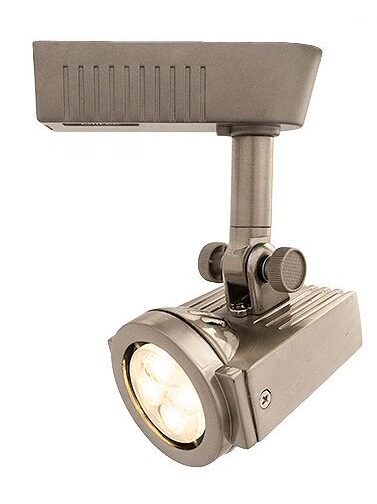
Get the most out of your light with smart tools. Again, here we will see that 45 degree angle is important. Use 45 degrees angled downward from behind the artist while creating to prevent shadows and on either side of the piece when displayed. Use lamp shades on lamps and fixtures or sheers on windows to diffuse it where you may have them in your studio. Use dimmers to adjust lumens, and telescoping or spotlight fixtures for proximity for both studios and galleries. Closer lights are brighter and more focused, ideal for details, but keep UV and heat in mind.
Track Lighting: Your Versatile MVP
Track lighting stands out as the most popular and adaptable option for both studios and galleries. With dual-circuit options, you can control fixtures independently. Add dimmers and shades for precision, extension rods for proximity, and fixtures with color temperature selection technology for customization at any given time. We even offer fixtures with adjustable lenses where you can adjust the fixture from a spot to a flood as needed making for excellent individual control. This flexibility makes it easy to tailor lighting to your unique studio or gallery needs. But choosing the best, based on budget is critical. We work on finding the best fixture to get the job done right and staying within the budget.

So, wrap it up with 5,000K, 85-95+ CRI, and 600- 2,400 lumens for studios, or the same temp and CRI with 1,200-3200 lumens for galleries and let our experts at Total Track Lighting light up your art journey. Our 7 easy steps tool, found here, gathers key details to build a custom system, pre-filling your cart with fixtures and bulbs. This cuts planning time, boosts accuracy, and speeds up jobs—keeping you competitive and profitable. Or you can hit us up at support@totallightingsupply.com! Our team replies very fast. And no AI, only real lighting people here. Let us help you illuminate your creations brilliantly!